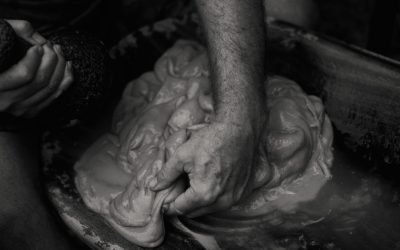


Hawaiian man pounding ʻai with keiki. 1890s.
“Wakea, Sky Father, and Papa, Earth Mother, had a beautiful daughter named Hoʻohōkūkalani. Hoʻohōkūkalani gave birth to a baby boy. Can you imagine her sadness when the child was stillborn? This child, a son, was named Hāloa which means long, eternal breath. The kūpuna (elders) whispered, “the child looks like a root.” The family wrapped Hāloa in kapa, placed him in a basket of woven lauhala, and buried him in the ʻāina.
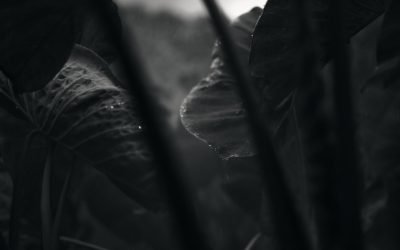
Hoʻohōkūlani grieved the loss of her son, crying and mourning and watering the grave with her tears. Before long, a plant started growing from the same spot where the baby was buried. This plant with itʻs long stalk and heart-shaped leaf was named Hāloanakalaukapalili for its leaves that fluttered in the wind. It was the first kalo plant.
Hoʻohōkūkalani became pregnant again. This time, a healthy, thriving baby boy was born. He was given the name “Hāloa” in honor of his older brother, the kalo. Hāloa was the first Hawaiian person.
Hawaiians trace their roots back to Hāloa, thus stating that we are all “mamo na Hāloa,” or descendants of Hāloa. This creation story shows Hawaiian’s reverence to this primary food source and speaks to the sacred human relationship to the kalo plant, the ʻāina, and the rest of the natural world.”
In this moʻolelo, Wākea and Hoʻohōkūkalani have a child. When it comes time for that child to be born, they find that he, unfortunately, is without life, so they bury the baby outside of the hale. In their mourning, they are consoled when they find that out of the area that the child was buried, came forth the first kalo plant, which they name Hāloanakalaukapalili. Hoʻohōkūkalani becomes pregnant again, this time giving birth to a healthy baby boy, who they also name Hāloa, after his kuaʻana (elder brother). Hāloa the kaikaina (younger brother) becomes the first aliʻi and the progenitor of the Hawaiian people, establishing in the Hawaiian world the familial connection of all Hawaiians to kalo. In the moʻolelo, we are reminded of our kuleana (responsibility, privilege) as kānaka (people) to mālama (care for) kalo, who in turn will feed, care for, and nourish us.


HAʻAWINA (LIFE LESSONS)
E mālama ʻāina (To care for ʻāina. In the moʻolelo, Hāloa the kanaka has a kuleana to care for Hāloa the kalo, his kuaʻana or elder sibling. In return, Hāloa the kalo cares for and feeds his kaikaina (younger sibling. This is a reminder to us as kānaka of our kuleana (responsibility and privilege) to care for ʻāina as we would care for a family member.

Sources:
“Moolelo Hawaii Kahiko, Mokuna III.” Ka Naʻi Aupuni, vol. II, no. 18, 22 June 1906. Papakilo Database.
“Moolelo Kahiko No Hawaii, Mokuna III, Ka Moolelo o ko Wakea.” Ka Hoku o Hawaii, vol. XXII, 9 Apr. 1929. Papakilo Database.